2026-06-20
Pijar Journal of Islamic Economics and Finance (PJIEF)
Announcements
Current IssueVol 1, No 01 (2026): April (Pijar Journal of Islamic Economics and Finance)
Published April 28, 2026
Issue Description
Pijar Journal of Islamic Economics and Finance (PJIEF) is a premier peer-reviewed academic journal dedicated to advancing knowledge in the fields of Islamic economics and finance. The journal is part of the Pijar Multidisciplinary Research Journal ecosystem, officially established in January 2026 and managed under the legal entity of PT Pijar Cendekia Nusantara. Islamic Economics and Finance (PJIEF) publishes scientific research articles in the fields of Islamic Economics, Islamic Finance, Islamic Banking, Halal Studies, and Islamic Philanthropy. After a rigorous review and selection process, we accepted 6 articles for publication in this edition. This edition has been available online since April 28, 2026
DOI :
Published : 2026-04-28... More
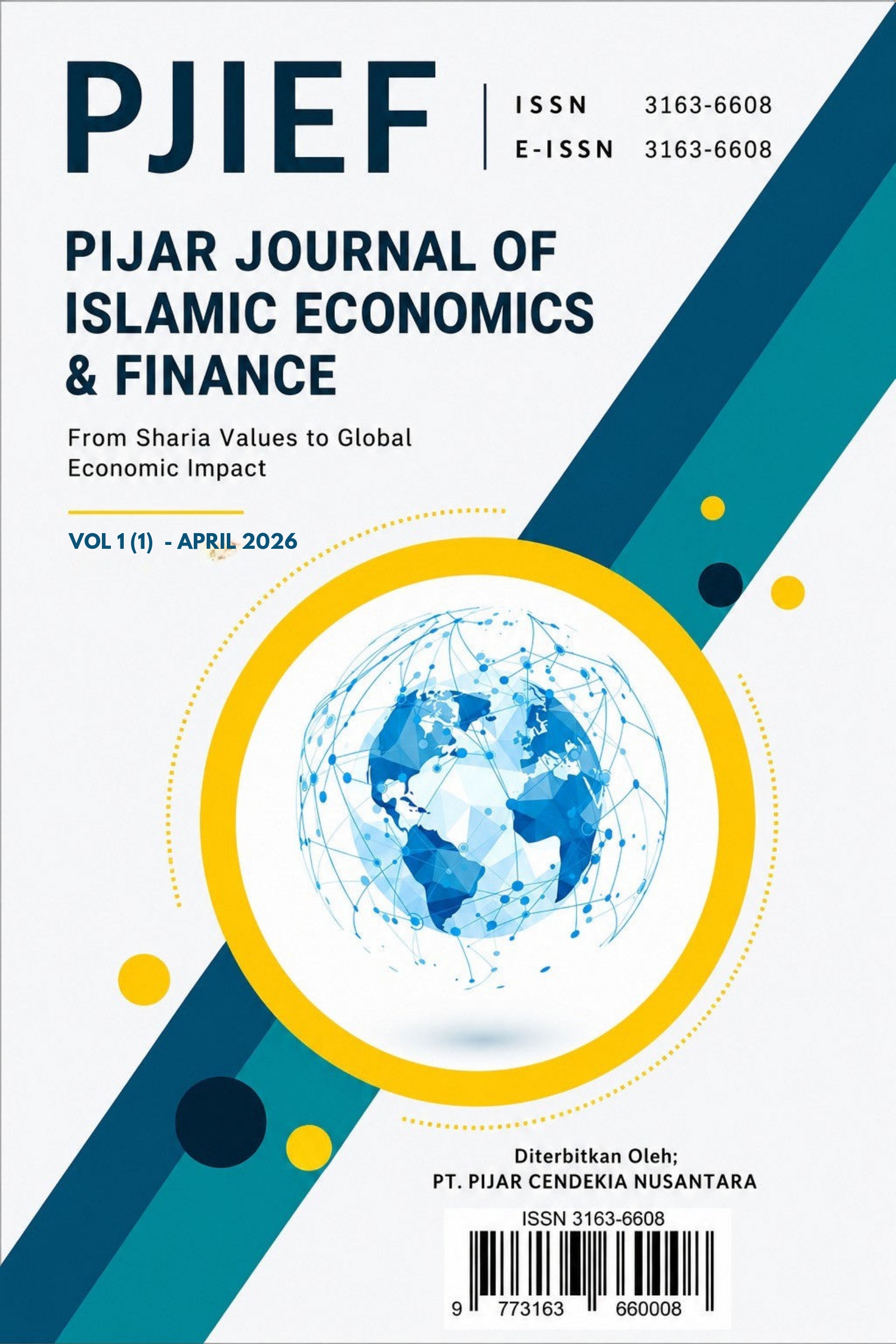
Table of Contents
Articles
About the Journal
Pijar Journal of Islamic Economics and Finance (PJIEF) is a premier peer-reviewed academic journal dedicated to advancing knowledge in the fields of Islamic economics and finance. The journal is part of the Pijar Multidisciplinary Research Journal ecosystem, officially established in January 2026 and managed under the legal entity of PT Pijar Cendekia Nusantara. PJIEF serves as an Open Access scientific publication platform, utilizing the Open Journal System (OJS) to support the widespread dissemination of knowledge to academics, practitioners, and policymakers globally. From its inception, Pijar has been committed to maintaining global publication quality standards through:
- The implementation of Digital Object Identifier (DOI) for all published articles.
- The use of international standard manuscript templates.
- Periodic refinements to Author Guidelines to align with current publication ethics.
Publication Frequency: The journal is published bimonthly (three times a year) in January, April, and September.
We welcome strategic collaborations with universities and research institutions to foster a superior Islamic economic research ecosystem.
Focus & Scope
Pijar Journal of Islamic Economics and Finance invites scholars, researchers, and practitioners to submit original manuscripts that have not been published elsewhere. The journal aims to provide a platform for high-quality research related to the theory, practice, and policy of Islamic economics. The scope of the journal includes, but is not limited to, the following areas:
- Islamic Banking and Finance: Islamic bank management, risk management, financial performance, and financial stability.
- Islamic Accounting and Audit: Financial reporting standards, Sharia auditing, and Sharia compliance in reporting.
- Islamic Social Finance (ZISWAF): Governance and management of Zakat, Infaq, Sadaqah, and Waqf for economic development and poverty alleviation.
- Halal Industry & Green Economy: Studies on halal tourism, halal food industry, modest fashion, and the integration of Islamic economics with sustainability (SDGs).
- Islamic Capital Markets & Non-Bank Financial Institutions: Sukuk, Islamic stocks, mutual funds, Islamic insurance (Takaful), and Islamic pawnshops.
- Islamic Financial Technology (Fintech): Blockchain, Islamic crypto-assets, peer-to-peer lending, crowdfunding, and digitalization of Islamic financial services.
- Islamic Economic Law (Fiqh Muamalah): Analysis of Shariah contracts, Shariah compliance, and regulatory frameworks.
- Islamic Business Management & Entrepreneurship: Islamic business ethics, Muslim consumer behavior, and Islamic marketing strategies.
- History & Thought of Islamic Economics: Studies on prominent figures, the history of Islamic economic institutions, and the philosophy of Islamic economics.
-
History & Islamic Economic Thought: A study of prominent scholars, the history of Islamic economic institutions, and the philosophy of Islamic economics.
Indexed In